We'll be back with a bigger and better website soon. In the meantime, feel free to reach out to us at any time.
Thanks!
Monday, March 30, 2020
Thursday, May 26, 2016
Introducing Home Expressions
A short, quick note regarding a change in this blog and email newsletter.
Friends, Family Members, Clients (past, present, and future!), Colleagues - Please keep your eyes open for an email from me in the next day or two titled "Home Expressions." It will be the same great content you've come to expect, but in a better-looking format.
Realtors, Loan Officers, and other industry specialists - I'm making this change in an effort to help you. Please visit www.8DollarFarming.com to see how you can cultivate the same long term relationships with your friends and clients that I have enjoyed.
As I mentioned in my last article, I will continue to write about things homeowners find useful and interesting - anything and everything is fair game, but I am going to distribute this content via a direct email newsletter, rather than the current format of publishing a blog post and then having a service auto-email my blog post to you. And thus, "Home Expressions" is born...
Thank you,
Chris Butterworth
.
Friends, Family Members, Clients (past, present, and future!), Colleagues - Please keep your eyes open for an email from me in the next day or two titled "Home Expressions." It will be the same great content you've come to expect, but in a better-looking format.
Realtors, Loan Officers, and other industry specialists - I'm making this change in an effort to help you. Please visit www.8DollarFarming.com to see how you can cultivate the same long term relationships with your friends and clients that I have enjoyed.
As I mentioned in my last article, I will continue to write about things homeowners find useful and interesting - anything and everything is fair game, but I am going to distribute this content via a direct email newsletter, rather than the current format of publishing a blog post and then having a service auto-email my blog post to you. And thus, "Home Expressions" is born...
Thank you,
Chris Butterworth
.

Friday, March 25, 2016
What $300,000 buys in the East Valley
The Valley of the Sun is a big area - somewhere in the neighborhood of 900 square miles. (For comparison, Washington DC is about 75 square miles and the State of Rhode Island is about 1,500.) And as can be expected for an area of that size, there are significant differences between different neighborhoods - styles, communities, and yes - prices.
Today I thought I'd take a look at what a $300,000 house looks like in different parts of the East Valley.
Programming Note - upcoming change in format
Before we get started, I have a major announcement regarding my website and this newsletter.
Beginning next month, I will be separating this newsletter from my website, creating a true newsletter - whose content is distinct and unique, and will only be distributed via email. The name will change as well; it will no longer be called Viewpoint.
For the last several years I've published these articles on my website at ThePhoenixAgents.com, and the website has emailed them to you as the "Viewpoint" through the magic of rss technology.
In summary - you will still receive the same great newsletter you've come to expect, only it will have a different title and will only be available through email.
And now, back to the East Valley...
Before we look at the homes, let's discuss the parameters - how exactly did I choose these homes?
The Results - What does $300,000 buy in:
Scottsdale


Mesa


Gilbert


Queen Creek


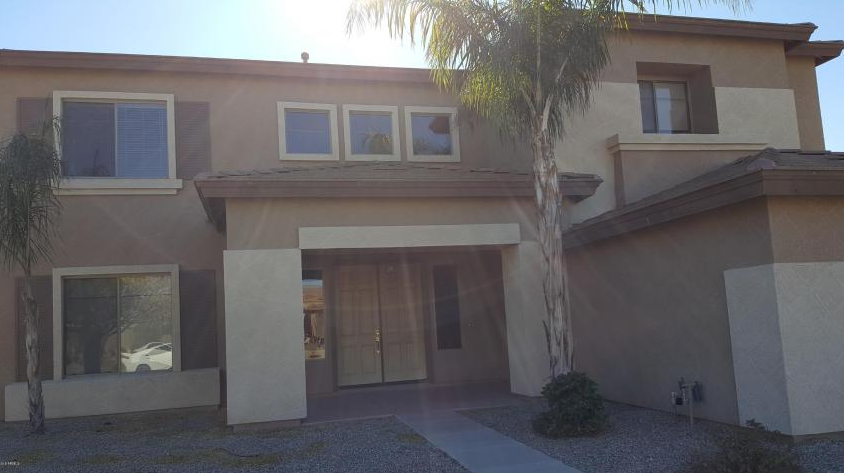
These four homes are very different; so are the four neighborhoods. Year built, size of house (and yard), and the quality of appointments (cabinets, counter tops, fixtures, hardware, etc.) stand out the most. Using size as the most basic measurement, the homes get larger as you get further away from the center of the Valley: 2000 ft in Scottsdale, 2400 ft in Mesa, 2900 ft in Gilbert, and 3200 ft in Queen Creek.
I also see differences in the quality of the MLS photos - for example, the Mesa house's kitchen picture appears to be a large family-style kitchen, but if you look closely there are only 5 tiles between the edge of the picture and the kitchen island. The photo was taken with a camera lens that makes it look much larger.
Considering it can be upwards of a 2-hour drive from one corner of the Valley to the other (think Surprise to Queen Creek), where you buy can have a profound effect on what you think about the "Phoenix area."
Please give Cheryl or myself a call-email if you have any questions about different areas, or if you want to see more photos of certain neighborhoods. We can set up an MLS search for you to see all the listings of a specific area, based on whatever criteria you choose.
Thank you for reading,
Chris Butterworth
Note - All photos are copyright of ARMLS (Arizona Regional Multiple Listing Service). All data is believed to be accurate but not guaranteed. Home sizes and lot sizes may have been rounded.
.
Today I thought I'd take a look at what a $300,000 house looks like in different parts of the East Valley.
Programming Note - upcoming change in format
Before we get started, I have a major announcement regarding my website and this newsletter.
Beginning next month, I will be separating this newsletter from my website, creating a true newsletter - whose content is distinct and unique, and will only be distributed via email. The name will change as well; it will no longer be called Viewpoint.
For the last several years I've published these articles on my website at ThePhoenixAgents.com, and the website has emailed them to you as the "Viewpoint" through the magic of rss technology.
In summary - you will still receive the same great newsletter you've come to expect, only it will have a different title and will only be available through email.
And now, back to the East Valley...
Before we look at the homes, let's discuss the parameters - how exactly did I choose these homes?
- I pulled (from ARMLS) all the Single Family Detached homes that sold in February for each city.
- If the city had more than one home which sold for exactly $300,000, I chose the home which sold the fastest as my example.
- If the city did not have a home sell for exactly $300,000, I chose the home which sold closest to, but not above, $300,000.
- If the home looked like a statistical outlier in some way and did not represent other homes from the same price range and area, I skipped it in favor of the next home which matched the above.
The Results - What does $300,000 buy in:
Scottsdale
- 2,100 square feet on an 11,000 square foot lot
- 3 bedrooms / 2 bathrooms
- Built in 1968
- Swimming pool
- Bank-owned / Foreclosed property
- 13 days on the market
- Located west of Loop 101 between Indian Bend and McDonald


- 2,400 square feet on a 10,000 square foot lot
- 3 bedrooms + den / 3 bathrooms
- Built in 1995
- 135 days on the market
- Located southwest of Greenfield and Brown


Gilbert
- 2,900 square feet on an 8,000 square foot lot
- 4 bedrooms / 3.5 bathrooms
- Built in 1988
- Swimming pool
- 45 days on the market
- Located east of McQueen between Warner and Elliot


Queen Creek
- 3,200 square feet on a 12,000 square foot lot
- 4 bedrooms + den + loft / 3 bathrooms
- Built in 2004
- 35 days on the market
- Located east of Ellsworth and Rittenhouse


Conclusion
These four homes are very different; so are the four neighborhoods. Year built, size of house (and yard), and the quality of appointments (cabinets, counter tops, fixtures, hardware, etc.) stand out the most. Using size as the most basic measurement, the homes get larger as you get further away from the center of the Valley: 2000 ft in Scottsdale, 2400 ft in Mesa, 2900 ft in Gilbert, and 3200 ft in Queen Creek.
I also see differences in the quality of the MLS photos - for example, the Mesa house's kitchen picture appears to be a large family-style kitchen, but if you look closely there are only 5 tiles between the edge of the picture and the kitchen island. The photo was taken with a camera lens that makes it look much larger.
Please give Cheryl or myself a call-email if you have any questions about different areas, or if you want to see more photos of certain neighborhoods. We can set up an MLS search for you to see all the listings of a specific area, based on whatever criteria you choose.
Thank you for reading,
Chris Butterworth
Note - All photos are copyright of ARMLS (Arizona Regional Multiple Listing Service). All data is believed to be accurate but not guaranteed. Home sizes and lot sizes may have been rounded.
.
Friday, February 26, 2016
Keeping a Clean House - the simple way, part 3
This is Part 3 of a 3-part series discussing some of the habits of people who always seem to have a clean house, regardless of when you might stop in. (You can read Part 1 and Part 2 of the series here.)
It's important to understand with all of these habits, that these are not "things to do in order to clean your house" or "extra steps needed in order to clean your house." These are simply habits that people have - people whose homes are generally clean.
These habits are more about time-shifting - doing things you will have to do at some point anyway, but doing them sooner and with more regularity. They're about changing your mindset to one where cleaning isn't a giant evil chore, but instead a simple completion of the current activity.
And with that, let's take a look at three more habits people with clean homes practice:
6.) Put your clothes away, everyday
When you get home from work, you change into your 'casual hanging out around the house clothes', right? But what do you do with your work clothes?
People who keep clean homes put them away. Dirty clothes go into the hamper. Jacket, belt, and tie get hung up. Shoes go back in the closet, and anything that might be worn again before being cleaned gets hung up or folded and put away.
The other clothes that get put away everyday are the newly folded laundry. Since you're doing laundry everyday, your clean clothes pile shouldn't be very big, so it's easy to put these few items away.
The payoff for Putting Your Clothes Away Everyday: No piles of dirty clothes lying around on the floor, no piles of clean clothes stacked to the ceiling and sitting on top of your dresser, and no confusion about where a particular piece of clothing might be.
7.) Clean as you go
People with clean homes tend to think of cleaning up as the final part of the task, rather than keeping it as a separate chore to do later.
Dinner - Clean the prep area and dishes while the main course is in the oven, and you only have to worry about half the mess after dinner is over. Clean up immediately after dinner (which shouldn't be too hard since your dishwasher was emptied in the morning), and you finish the night with a clean kitchen.
Projects, Games & Activities - Finish one (which means cleaning up and putting it away) before you get into the next one. And this one holds even more true for the kids - getting them into this habit will help keep your home cleaner as well as giving them a headstart on keeping clean as they get older. Board games, crafts and scrapbooks, sports equipment, homework - it all falls into the same pattern: get something out, play with or use it, and then put it away. Lather, rinse, repeat.
The payoff for Cleaning as you Go: Less clutter, and less cleaning chores to do. Spending a few seconds (board games) to a few minutes (dinner prep dishes) doesn't feel like much of a task, especially compared to a Saturday "power cleaning session" where you have to make a day out of the same work.
8.) Nighttime routine
You ate dinner, spent some family time together, watched a little tv, and helped the kids get ready for bed, before finally getting a chance to relax and unwind for the evening. People with clean homes use a few minutes of this time to finish up their day (tying up any loose ends) and prepare for tomorrow.
Picking out clothes to wear tomorrow, making tomorrow's lunch, and taking a walk through the house to tidy up and maybe turn off a light that had been left on or putting away a cup that had been left on the counter; these are all simple routines - things which don't take a lot of time or energy, but which are much easier to do without the time-stress-crunch of late-for-work or late-for-school of the morning.
The payoff for a Nighttime Routine
It's difficult to overstate how much calmer and easier some of these tasks are in the quiet of a late night house compared with the hectic stress of a running-late morning. Not only are the tasks themselves made simpler and more relaxing, but they now free up that much more time in the morning, which leads to less stress and less hectic mornings. It's a win-win.
These habits of people with generally clean homes, just like those we discussed in Part 1 and Part 2, are more about doing small tasks frequently compared with waiting around for a large chore to be required.
Spending one minute each day may be the same as spending seven minutes on the weekend, but you don't have clutter around the house when you do it each day, and you don't have to waste your weekend on cleaning chores.
I would even argue the larger chore will take more time than all the smaller tasks combined, due to lost pieces, confusion, or even stuck-on dirt and grime.
I hope you give these a try - hopefully you can get into a few of (or all of) these 8 habits. Your home will be forever cleaner if you do.
- Chris Butterworth
This was Part 3 of a 3-part series. Read Part 1 and Part 2 here.
.
It's important to understand with all of these habits, that these are not "things to do in order to clean your house" or "extra steps needed in order to clean your house." These are simply habits that people have - people whose homes are generally clean.
These habits are more about time-shifting - doing things you will have to do at some point anyway, but doing them sooner and with more regularity. They're about changing your mindset to one where cleaning isn't a giant evil chore, but instead a simple completion of the current activity.
And with that, let's take a look at three more habits people with clean homes practice:
6.) Put your clothes away, everyday
When you get home from work, you change into your 'casual hanging out around the house clothes', right? But what do you do with your work clothes?
People who keep clean homes put them away. Dirty clothes go into the hamper. Jacket, belt, and tie get hung up. Shoes go back in the closet, and anything that might be worn again before being cleaned gets hung up or folded and put away.
The other clothes that get put away everyday are the newly folded laundry. Since you're doing laundry everyday, your clean clothes pile shouldn't be very big, so it's easy to put these few items away.
The payoff for Putting Your Clothes Away Everyday: No piles of dirty clothes lying around on the floor, no piles of clean clothes stacked to the ceiling and sitting on top of your dresser, and no confusion about where a particular piece of clothing might be.
7.) Clean as you go
People with clean homes tend to think of cleaning up as the final part of the task, rather than keeping it as a separate chore to do later.
Dinner - Clean the prep area and dishes while the main course is in the oven, and you only have to worry about half the mess after dinner is over. Clean up immediately after dinner (which shouldn't be too hard since your dishwasher was emptied in the morning), and you finish the night with a clean kitchen.
Projects, Games & Activities - Finish one (which means cleaning up and putting it away) before you get into the next one. And this one holds even more true for the kids - getting them into this habit will help keep your home cleaner as well as giving them a headstart on keeping clean as they get older. Board games, crafts and scrapbooks, sports equipment, homework - it all falls into the same pattern: get something out, play with or use it, and then put it away. Lather, rinse, repeat.
The payoff for Cleaning as you Go: Less clutter, and less cleaning chores to do. Spending a few seconds (board games) to a few minutes (dinner prep dishes) doesn't feel like much of a task, especially compared to a Saturday "power cleaning session" where you have to make a day out of the same work.
8.) Nighttime routine
You ate dinner, spent some family time together, watched a little tv, and helped the kids get ready for bed, before finally getting a chance to relax and unwind for the evening. People with clean homes use a few minutes of this time to finish up their day (tying up any loose ends) and prepare for tomorrow.
Picking out clothes to wear tomorrow, making tomorrow's lunch, and taking a walk through the house to tidy up and maybe turn off a light that had been left on or putting away a cup that had been left on the counter; these are all simple routines - things which don't take a lot of time or energy, but which are much easier to do without the time-stress-crunch of late-for-work or late-for-school of the morning.
The payoff for a Nighttime Routine
It's difficult to overstate how much calmer and easier some of these tasks are in the quiet of a late night house compared with the hectic stress of a running-late morning. Not only are the tasks themselves made simpler and more relaxing, but they now free up that much more time in the morning, which leads to less stress and less hectic mornings. It's a win-win.
These habits of people with generally clean homes, just like those we discussed in Part 1 and Part 2, are more about doing small tasks frequently compared with waiting around for a large chore to be required.
Spending one minute each day may be the same as spending seven minutes on the weekend, but you don't have clutter around the house when you do it each day, and you don't have to waste your weekend on cleaning chores.
I would even argue the larger chore will take more time than all the smaller tasks combined, due to lost pieces, confusion, or even stuck-on dirt and grime.
I hope you give these a try - hopefully you can get into a few of (or all of) these 8 habits. Your home will be forever cleaner if you do.
- Chris Butterworth
This was Part 3 of a 3-part series. Read Part 1 and Part 2 here.
.
Wednesday, February 10, 2016
Real Estate Pricing - has the market recovered?
It's been a full year since I pulled some statistics from the ARMLS database and took a detailed look at pricing trends. In the meantime, I've had conversations with multiple people recently centered around the price of their home as compared to what it would have sold for "at the peak". Obviously, that seems like a good place to start looking around.
From Peak to Valley to Comeback?
The Phoenix real estate market peaked in August, 2006, as far as the lightning fast, white hot, crazy market went. Prices, however, continued to rise for another several months.
Once prices started dropping in 2007, they dropped fast and far, before bottoming out in late 2009 or early 2010.
For comparison purposes, I pulled sales data from the 4th Quarter of 2006, 2009, and 2015. This should give us a good read of where we've been and where we are currently.
Median Sales Price
Chart showing 4th Qtr 2006, 4th Qtr 2009, and 4th Qtr 2015 - for several cities in the East and West Valley. (click to enlarge)

It's clear that prices have rebounded a long way from the bottom, with a few cities' prices approaching their 2006 peak.
Here's the table containing the data, for those analysts out there.

Median Price per Square Foot
Same time frames, same cities, but this time we'll look at the price per square foot, as this will adjust for changes in prices due to larger or smaller homes being built over the last 10 years.


Well, the charts aren't identical to the Median Price charts - the 2015 numbers haven't rebounded quite as high as the median prices' chart. This means that homes are larger than they were in years past. But it doesn't change the trend; the peak-valley-rebound images are very similar to the previous charts.
Number of Homes Sold
Once again we'll pull the same time periods and cities, only this time we'll put pricing aside and just look at how many homes have sold.


What does this chart tell us? No, seriously, I'm asking you.. I've looked at these numbers two dozen times, and I'm not sure what they're saying, other than to point out that Phoenix is far and away the largest city in terms of housing units.
Some cities are relatively flat over all three periods, while others vary wildly, but I don't see a relationship to east-west, north-south, big-small, landlocked-outskirts, socioeconomic, etc.
Summary and Forecasting
What does all this mean? Well, that's the million dollar question.
Prices have been rising for seven years in a row, and they're getting close to peak levels in some cities. At the same time, I'm not sure how much wages have been rising. I know lots of people who are making the same amount (or less than) they made a decade ago, and not too many who are making significantly more. (although some of this is gut feeling, since I don't have access to everybody's current salary.)
It does feel as if employment levels have stabilized. I remember a time a few years ago when a job posting on craigslist brought about a hundred resumes on the first day. These days I know a couple companies who have had a harder time finding good help.
Last year I was worried about interest rates, or at least that there was so much more room for rates to increase compared with the opportunity for rate reductions. And what happened? Several countries' central banks have moved interest rates negative - banks have to actually pay interest to keep surplus money on hand!
I'm not smart enough to figure out what is going to happen next, but I can say this is a strange economic environment - one we've never seen before. And I still think interest rates have more room to increase than to decrease. (The next chart below is from last year's post, showing how much an interest rate change can affect monthly payments.)

Final Advice
I'm not going to tell you whether to buy, or sell, or what city is "hot", or anything else you should be doing with your investment dollars.
I'll simply advise to be careful. Cover your bets. Make decisions based on well-crafted plans. Don't be surprised if the market doesn't do exactly what you expected it to.
And give Cheryl and myself a call if you have any real estate needs! (that's my best advice, after all.)
- Chris Butterworth
* All data was pulled from the Arizona Regional MLS system, for Single Family Residence detached homes which successfully closed escrow between October 1st and December 31st of 2006, 2009, and 2015. Data is believed to be accurate but not guaranteed.
.
From Peak to Valley to Comeback?
The Phoenix real estate market peaked in August, 2006, as far as the lightning fast, white hot, crazy market went. Prices, however, continued to rise for another several months.
Once prices started dropping in 2007, they dropped fast and far, before bottoming out in late 2009 or early 2010.
For comparison purposes, I pulled sales data from the 4th Quarter of 2006, 2009, and 2015. This should give us a good read of where we've been and where we are currently.
Median Sales Price
Chart showing 4th Qtr 2006, 4th Qtr 2009, and 4th Qtr 2015 - for several cities in the East and West Valley. (click to enlarge)

It's clear that prices have rebounded a long way from the bottom, with a few cities' prices approaching their 2006 peak.
Here's the table containing the data, for those analysts out there.

Median Price per Square Foot
Same time frames, same cities, but this time we'll look at the price per square foot, as this will adjust for changes in prices due to larger or smaller homes being built over the last 10 years.


Number of Homes Sold
Once again we'll pull the same time periods and cities, only this time we'll put pricing aside and just look at how many homes have sold.


Some cities are relatively flat over all three periods, while others vary wildly, but I don't see a relationship to east-west, north-south, big-small, landlocked-outskirts, socioeconomic, etc.
Summary and Forecasting
What does all this mean? Well, that's the million dollar question.
Prices have been rising for seven years in a row, and they're getting close to peak levels in some cities. At the same time, I'm not sure how much wages have been rising. I know lots of people who are making the same amount (or less than) they made a decade ago, and not too many who are making significantly more. (although some of this is gut feeling, since I don't have access to everybody's current salary.)
It does feel as if employment levels have stabilized. I remember a time a few years ago when a job posting on craigslist brought about a hundred resumes on the first day. These days I know a couple companies who have had a harder time finding good help.
Last year I was worried about interest rates, or at least that there was so much more room for rates to increase compared with the opportunity for rate reductions. And what happened? Several countries' central banks have moved interest rates negative - banks have to actually pay interest to keep surplus money on hand!
I'm not smart enough to figure out what is going to happen next, but I can say this is a strange economic environment - one we've never seen before. And I still think interest rates have more room to increase than to decrease. (The next chart below is from last year's post, showing how much an interest rate change can affect monthly payments.)
Final Advice
I'm not going to tell you whether to buy, or sell, or what city is "hot", or anything else you should be doing with your investment dollars.
I'll simply advise to be careful. Cover your bets. Make decisions based on well-crafted plans. Don't be surprised if the market doesn't do exactly what you expected it to.
And give Cheryl and myself a call if you have any real estate needs! (that's my best advice, after all.)
- Chris Butterworth
* All data was pulled from the Arizona Regional MLS system, for Single Family Residence detached homes which successfully closed escrow between October 1st and December 31st of 2006, 2009, and 2015. Data is believed to be accurate but not guaranteed.
.
Tuesday, January 26, 2016
Keeping a Clean House - the simple way, part 2
"If I had to pick one thing, which you as a homeowner has control over, that makes the biggest difference in how a house "feels"? Having a clean and clutter-free home wins the prize, every time."Earlier in the month I wrote about a couple simple habits that people with clean homes do everyday. They're the kinds of things that take 5 minutes in the morning, yet they can make a profound difference in how your home looks, functions, and feels. (And I'm not talking about Martha Stewart style deep cleaning or crafting your own furniture - these are just simple routines, doing things you would have done anyway but just a little bit differently.)
Well, since this is Part 2 (you can read Part 1 here), let's get down to it. Here are a few more habits of people whose homes tend to always be clean:
3.) Do a load of Laundry every day (for families - not as important if there's only two of you.)
Laundry is a bad deal. At best it's a pain in the butt chore; at worst it's a Sisyphean task that can never be accomplished! Let's see if I can sum up how laundry usually works:
- During the week everybody's clothes pile up into hampers, until they eventually overflow (and make the bedrooms look cluttered.)
- At some point during the week, somebody is going to want or need to wear something they can't find. "Check the dirty clothes" will be your reply - and then you'll have to determine what to do with this request.
- In addition, you may find some dingy smells lingering around - especially if your teenagers play sports.
- Eventually, probably on Sunday, you'll have to get psyched up for "Laundry Day", where you'll hole up in the house and crank out load after load of wash.
- You can't really get out and do things, because you need to be there to empty the dryer and change out the next load. So you basically lose a weekend-day.
- Forget about it on the weekends when you also need to do sheets and towels!
- And who's going to fold that mountain of clean clothes - yikes.
Yeah, that's how our laundry system ran for years, until my wife eventually figured out a better solution. Now we do a load of laundry everyday, and it looks more like this:
- Each morning, as the boys wake up and before breakfast gets started, round up the few items from everybody's hamper and throw them in the washing machine.
- Depending on the day (and your energy plan), they either go into the dryer that morning on the way out the door, or they go into the dryer when we get home from work.
- Later in the evening it takes a couple-few minutes to fold the clothes while a tv show is on.
The payoff for Laundry Everyday: No lost weekends, no clutter or overflowing smelly clothes, and no problems with not having something available to wear when you want or need to wear it.
4.) Don't Procrastinate
You got the mail? Good. Bills go in the office, greeting cards go on the shelf, and junk-mail gets shredded. And you're done - no clutter.
Your package arrived from Amazon.com? Awesome! Your new doohickey gets the attention, but the receipt gets filed, the air bubble bags get popped and thrown away, and the box gets broken down and placed in the recycle bin. And you're done - no clutter.
The kid out-grew some t-shirts which are now sitting in a pile next to his dresser? Get 'em outta there - put them in a bin of "to be donated" in the garage. And you're done - no clutter.
Are you sensing the trend here? You're going to have to address these things at some point - opening and sorting mail, throwing away packaging and boxes, etc. Why let them sit around and clutter your house for a few days, or weeks? Better to just do it, and be done with it.
The payoff for Not Procrastinating: This one's a no-brainer: You're not spending a single second extra - these are the exact same tasks you'll have to do later anyway, but now your house stays clutter-free.
5.) Use Baskets to Eliminate Clutter
This one almost falls into the home design and function category, but because we're talking about people's habits, I'm going to include it in our list.
Every room has those few extra things - too small to permanently mount but too big or too many to leave laying around. Get a good basket (that matches your decor), and put all these little miscellaneous things into it. Yes, put them away. Every time.
- In the living room you've got multiple remote controls, some coasters, and a pair of reading glasses. When you're finished using them, put them away. Every time.
- The kitchen is the worst offender, with extra keys, scissors, some coupons, pens and pencils (only half of which actually write), a screw that goes with heaven knows what, and a couple things you aren't even sure what they are. The first thing to do is to get rid of (or find a more permanent home for) the things you never use. Then, keep everything else handy and yet out of sight in a basket or drawer. Get something out when you need it, and then put it away again. Every time.
- The bedroom is another place with lots of small items which get used frequently: watches, jewelry, wallet, car keys, loose change, a pen, etc. Have a place available to put these things where they won't be clutter and where they won't get lost, and then put them away - Every time.
The payoff for Using Baskets to Eliminate Clutter: You can get baskets (or boxes, or containers) in any size, color, or style to match your needs and your decor, so they'll help make your home look great. They'll reduce clutter because all those little pieces will be hidden from view. And they'll help you keep your stuff from getting lost - be honest, who hasn't wasted time digging through the couch or wandering from room to room looking for a tv remote or their car keys?!
When you take a step back and look at the big picture, these people whose houses are always clean don't do any more cleaning - they have simply developed the habit of spending a few extra seconds "now" to finish a task, rather than waiting until later to do the same task (or in some cases an even larger task.)
2 or 3 minutes to start a small load of laundry in the morning - frees up time for the weekend. Three seconds to put the tv remote in a basket when they're done watching tv - saves the next person 90 seconds trying to find the remote. Another 3 seconds dropping their car keys into a container when they get undressed - saves 5 minutes of stressful chaos trying to find keys when you're late for work the next morning!
Small amounts of time, small amounts of energy. Simple habits. Big Results!
Hopefully you can develop some of these habits too, and turn your home into an always clean and always ready for guests home!
- Chris Butterworth
This was part 2 of a series; read Part 1 here.
.
Friday, January 8, 2016
Keeping a Clean House - the simple way, part 1
My wife read an article recently which outline a few simple things people who have clean houses do everyday, and she was happy to report we do them all. (well, she does them all mostly, but I'll step in to take a little of the credit!) And as she reviewed the list with me, I was blown away by both the simplicity of it, and by the number of people who don't do it.
We all know the difference between a clean house and a, well, not-so-clean house, right? You probably have a few friends with homes you like to visit, and a few others with homes you can't wait to leave!
Clean homes are more inviting, they're more relaxing, they're less stressful - they're just better, both in the short term (day to day living) and the long term (more home value, less maintenance repairs), so why wouldn't you keep your house clean?
Probably because it's too much work, or at least it's perceived to be, and you don't have enough time. Well, let's take a look at these habits people with clean homes have, and see how difficult they really are.
Here are the first 2 things people with clean houses do:
1.) Empty the Dishwasher in the morning
A dirty kitchen is probably one of the huge differences between homes where you want to hang out, and homes where you don't.
If you spend 3 or 4 minutes emptying the dishwasher in the morning, you'll have a perfect place to put your dirty dishes the whole rest of the day, rather than letting them pile up in the sink, or on the counter and stove.
The Payoff for an Empty Dishwasher: For the rest of the day (and everyday thereafter since you'll do this everyday), your kitchen will be less cluttered with dirty stuff all over the place. In addition, you won't have as many breeding grounds for bacteria to fester and grow.
2.) Make your Bed when you wake up
This doesn't seem like that big a deal at first glance. After all, you generally aren't inviting people into your bedroom on a regular basis. But the difference in overall appearance will surprise you.
The Payoff for a Made Bed: It's the primary focal point of your bedroom; when it looks clean the rest of the room tends to follow.
When you think about the rooms where you spend the most time, your kitchen and bedroom are probably the top two. These two simple habits - emptying the dishwasher in the morning and making your bed when you wake up - will cost you less than 5 minutes each morning, but they'll have a profound effect on keeping your house clean.
I'll write more about the simple ways to keep your house clean in the coming weeks, so stay tuned.
If you don't already practice these habits, give them a try - I'd love to hear what you think!
- Chris Butterworth
This was part 1 of a series. Read part 2 here.
.
We all know the difference between a clean house and a, well, not-so-clean house, right? You probably have a few friends with homes you like to visit, and a few others with homes you can't wait to leave!
Clean homes are more inviting, they're more relaxing, they're less stressful - they're just better, both in the short term (day to day living) and the long term (more home value, less maintenance repairs), so why wouldn't you keep your house clean?
Probably because it's too much work, or at least it's perceived to be, and you don't have enough time. Well, let's take a look at these habits people with clean homes have, and see how difficult they really are.
Here are the first 2 things people with clean houses do:
1.) Empty the Dishwasher in the morning
A dirty kitchen is probably one of the huge differences between homes where you want to hang out, and homes where you don't.
If you spend 3 or 4 minutes emptying the dishwasher in the morning, you'll have a perfect place to put your dirty dishes the whole rest of the day, rather than letting them pile up in the sink, or on the counter and stove.
- The dishes will have to be put away anyway, why not in the morning?
- Once the dishwasher is empty, it takes about the same amount of time to set a dirty plate in the dishwasher as it does to set it in the sink. (maybe there's a 4.62 second variance, but that shouldn't be enough to complain about - you're not THAT busy!)
- If you rinse the plate off before putting it in the dishwasher, you're probably saving yourself time compared with having to scrape off that crusty food when you finally get to the dirty dishes later on in the day, or tomorrow.
The Payoff for an Empty Dishwasher: For the rest of the day (and everyday thereafter since you'll do this everyday), your kitchen will be less cluttered with dirty stuff all over the place. In addition, you won't have as many breeding grounds for bacteria to fester and grow.
2.) Make your Bed when you wake up
This doesn't seem like that big a deal at first glance. After all, you generally aren't inviting people into your bedroom on a regular basis. But the difference in overall appearance will surprise you.
- Once your bed is made, the room looks more complete and comfortable. There's an emotional / subliminal piece (or peace - both are true) here as well - "finishing" the room can lead to lower stress levels.
- When the bed is made, piles of stuff on the floor look much more out of place - you'll have a desire to pick these things up (or to not drop them there in the first place anymore.)
- When the bed is made, any dust or pet dander that lands on the bed during the day will now be on the outside of your blanket, rather than inside where you sleep. This should make a for a better, and possibly less itchy, night's sleep.
The Payoff for a Made Bed: It's the primary focal point of your bedroom; when it looks clean the rest of the room tends to follow.
When you think about the rooms where you spend the most time, your kitchen and bedroom are probably the top two. These two simple habits - emptying the dishwasher in the morning and making your bed when you wake up - will cost you less than 5 minutes each morning, but they'll have a profound effect on keeping your house clean.
I'll write more about the simple ways to keep your house clean in the coming weeks, so stay tuned.
If you don't already practice these habits, give them a try - I'd love to hear what you think!
- Chris Butterworth
This was part 1 of a series. Read part 2 here.
.
Thursday, September 3, 2015
5 steps to healthier trees and shrubs
New home builders have done a great job with drainage over the last couple decades, building subdivisions with such efficient drainage that the yards and streets are cleared of water within minutes after a heavy monsoon downpour. The downside to this awesome drainage is that your trees probably aren't getting enough water to develop a deep and healthy root system.
Now that the we're nearing the end of summer (I promise - it won't be too much longer!), this is a good time to see if you can get your trees some relief from the last 3 months' brutal heat.
Here are 5 simple ideas to help your plants do better next year:
1.) Check your drip system.
Turn on your drip system and take a walk around the yard, stopping to inspect each plant's emitters. You'll probably find a couple that are clogged and not dripping much water, and a couple that are broken and spraying gallons of water more than they should be.
Next turn the drip system back off and replace the broken emitters.
2.) Move your drip flags away from the base of the tree.
Just as your tree grows taller and wider, its root system is trying to grow deeper and wider. Moving your drip emitters away from the base of the tree will allow the roots to grow wider, ultimately making the tree stronger and healthier.
As a rule of thumb, the roots underground should reach out about as far as the leaves do above ground.
3.) Dig a well.
If your property is graded so that standing water runs off very quickly, and you have a tree that needs more water than some of the other trees, you can dig a well around the tree to allow water to pool and soak deeper into the ground.
Dig up some dirt from the high-ground side of the tree, and place the dirt onto the low-ground side of the tree. This should give you a circle of level ground around the tree.
Next use some of the extra dirt to build a dam (or a wall, berm, or well) around the tree.
Now you can fill the well with water, without having the water run down the yard and into the street, and your tree will get deep watered.

Most of us don't have yards quite this steep, but this picture shows the idea of using earth from the higher side of the tree to fill in the lower side of the tree. (image credit here.)

Once you have the ground somewhat level, you can build up a well to allow water to pool and soak into the ground, rather than running down the rest of your yard. (image credit here.)
4.) Get a bucket.
If you have a tree or bush in an area that your drip system doesn't cover, drill a small hole in one of those 5-gallon buckets from the hardware store. Fill the bucket with water and let it slowly drain out near your tree.
I have a pygmy palm tree in a corner of gravel in between the driveway and the front entryway. I'm not yet up for digging under the driveway to run a drip line, so I've been using the bucket method once a week, and the palms are doing really well.
5.) Prune, shape, and cultivate.
You can keep your trees and bushes healthy and looking good by trimming away dead and unwanted branches. Let the tree focus its energy into new growth in the areas where you want it to grow, rather than growing out new branches that you're just going to cut off once they get larger anyway.
Healthier trees with deeper roots make for better homes. The trees are less likely to blow over in the next windstorm, and they're roots are less likely to pull up your driveway in search of shallow water. They look better, too, which helps raise your property's value!
- Chris Butterworth
.
Wednesday, July 15, 2015
Non Toxic Ant Bait
It's summertime, that's for sure. I can tell because of the oppressive heat, humidity, bathtub temperature pool water, and long hours of daylight. I can also tell because the ants are out in full force!

We have our house serviced by regular pest control, but every week when I mow the yard I come across another new anthill or two. I've spot-treated anthills over the years using liquid pesticide sprays and/or granular ant baits, but I've never been totally comfortable with the idea of leaving toxins around the yard in areas where the kids and dog roam.
Recently my brother-in-law offered a more natural solution - an ant bait consisting of baking soda and powdered sugar. The powdered sugar attracts the ants, and the baking soda kills them.

Directions
Results

image credit: wildlensinc.org
We have our house serviced by regular pest control, but every week when I mow the yard I come across another new anthill or two. I've spot-treated anthills over the years using liquid pesticide sprays and/or granular ant baits, but I've never been totally comfortable with the idea of leaving toxins around the yard in areas where the kids and dog roam.
Recently my brother-in-law offered a more natural solution - an ant bait consisting of baking soda and powdered sugar. The powdered sugar attracts the ants, and the baking soda kills them.

Directions
- Mix equal parts Baking Soda and Powdered Sugar into a container. I made a bigger batch than I needed, which I stored in a sealed container as ready made bait for the next time I need it.
- Spread it liberally around the ant-infected area. You don't have to put it right on the mound; they'll find the sweet taste of sugar and bring it back to the colony.
- Over the next day or two the colony will feast on this bountiful harvest, and the baking soda will kill the ants, including the queen.
- No Substitutes - powdered sugar and baking soda have a very similar texture; once they're mixed together you can't really tell which is which. I don't think this trick would work as well with granulated sugar, as the ants could pull the sugar granules and leave behind the baking soda.
Results
- From my own personal experiences, this mixture has worked great on two different ant hills over two different weekends.
- Next time I come across a colony of mad ants (which shouldn't take too long), I'll take some before and after pictures and update this post.
In the meantime, give this a try at your house and let me know how it goes!
- Chris Butterworth
.
Tuesday, June 30, 2015
Cleaning Pool Tiles
How frustrating is that white, hard water calcium line around the your otherwise clean and refreshing swimming pool?
I've scrubbed at my pool tiles with different types of cleaners over the years, and I've paid hundreds of dollars to have the tiles professionally cleaned, but that white hard-water line always comes back. My brother-in-law offered a suggestion of replacing all the blue tiles with white tiles, but that's not the solution I was after.
Instead I decided this year to talk with the folks at the local pool supply store, who recommended either a chemical bath product to soak in the pool (which I'm not thrilled about trying) or a synthetic pool stone to scrub with (creatively called Pool Stone.)
I decided to give the Pool Stone a try.

The stone itself is light - like a piece of styrofoam, but after it soaks in the pool for 20 minutes it becomes much heavier and harder - more like a pumice stone.
Unlike a pumice stone, though, this synthetic stone works wonders. Sometimes I pressed hard and scrubbed with attitude to aggressively clean a tile in about a minute. Other times (when I got tired) I would rub the stone without much pressure at all and it still managed to clean a tile, although it would take two or three times as long per tile.
I didn't take a "before" picture of my pool, honestly because I didn't expect this stone to work any better than anything else I tried, and I didn't expect this project to go so quickly and smoothly. But here is a picture of one section of the pool tile after I had scrubbed a handful of tiles:

Here is another section of the pool where the tiles are mostly done:

And finally, here is a side of the pool where all the tiles look blue again:

This is one of those DIY projects that isn't difficult at all, and which can save you a ton of money compared with having a professional do it for you. A few extra thoughts and tips regarding the process:
And that's all there is to it.
I'd love to hear if you have a different / better way of keeping your pool tiles clean, of if you give this a try and it works for you too.
- Chris Butterworth
.
I've scrubbed at my pool tiles with different types of cleaners over the years, and I've paid hundreds of dollars to have the tiles professionally cleaned, but that white hard-water line always comes back. My brother-in-law offered a suggestion of replacing all the blue tiles with white tiles, but that's not the solution I was after.
Instead I decided this year to talk with the folks at the local pool supply store, who recommended either a chemical bath product to soak in the pool (which I'm not thrilled about trying) or a synthetic pool stone to scrub with (creatively called Pool Stone.)
I decided to give the Pool Stone a try.

The stone itself is light - like a piece of styrofoam, but after it soaks in the pool for 20 minutes it becomes much heavier and harder - more like a pumice stone.
Unlike a pumice stone, though, this synthetic stone works wonders. Sometimes I pressed hard and scrubbed with attitude to aggressively clean a tile in about a minute. Other times (when I got tired) I would rub the stone without much pressure at all and it still managed to clean a tile, although it would take two or three times as long per tile.
I didn't take a "before" picture of my pool, honestly because I didn't expect this stone to work any better than anything else I tried, and I didn't expect this project to go so quickly and smoothly. But here is a picture of one section of the pool tile after I had scrubbed a handful of tiles:

Here is another section of the pool where the tiles are mostly done:

And finally, here is a side of the pool where all the tiles look blue again:

This is one of those DIY projects that isn't difficult at all, and which can save you a ton of money compared with having a professional do it for you. A few extra thoughts and tips regarding the process:
- Slow and Steady - my pool has 186 tiles around the perimeter (if I counted correctly), so this wasn't something I could knock down in a day. I spent 20-30 minutes at a time over the course of a few weeks, cleaning 8-10 tiles in a session, before the whole pool was calcium line free.
- Clean Completely - the big thick white line usually comes off in just a few seconds, but if you look closely you'll see a smaller, fainter line as well. Many of the tiles also had a faint line under the water line. Whenever I didn't clean the tile completely, these faint lines showed up the next day and stood out from the "clean" tiles. I learned quickly to clean the tile completely if I wanted to have shiny clean tiles.
- Pool Stones wear away - I think I used up 5 Pool Stones during this project. At $10 each that's a chunk of change, but it's a fraction of the cost of a professional cleaning service.
- Soak the Stone - the stone will wear out very fast if you use it before it's soaked full of water.
- Maintenance - I'm going to buy a couple extra Pool Stones to have on hand; maybe I'll be proactive enough to scrub the tiles before they get really bad so I don't have to do this major clean up again in 2018.
- Wear Gloves - I scrubbed the first two days with bare hands, and on the third day my thumb was worn just about raw. I wore work gloves for the rest of the project and didn't have any other problems.
And that's all there is to it.
I'd love to hear if you have a different / better way of keeping your pool tiles clean, of if you give this a try and it works for you too.
- Chris Butterworth
.
Tuesday, February 10, 2015
What to expect from the market in 2015
The trouble with trouble is that you can't always see it coming; things will be going along just fine, until they aren't. And then it's too late. And then you're in trouble.
I'll start this post off by admitting I really don't know for sure what to expect from the market this year. (it seems like I say that every year lately). But I do have some concerns about headwinds (I've been saying that for a couple-few years too).
Let's take a look at some current local and global economic trends to see if we can discern what we might have in store...
Market Momentum
Local real estate prices are up about 10% - 15% over the last couple of years, or about 5% - 7% per year. That's a little too fast to be sustainable, but rising prices are generally considered a good thing. Buyers are more confident in their purchase, and even a little bit motivated to make an offer before prices go up again. Sellers gain confidence from knowing what they'll be able to net based on recent sales, as opposed to a falling market where sellers either panic or stay put.
(click on any chart or image to embiggen)



But, taking an objective approach, how much lower could they really go? Could we see a 30-year mortgage at 3.0%? 2.5%? Maybe. Rates have been close to zero in Japan for a generation, so there is a precedent. Unfortunately Japan has other problems which are offsetting, or forcing, those low interest rates, and none of those problems are conducive to a healthy real estate market.
On the flip side, it doesn't take much creativity to imagine a 30-year mortgage at 5% or 6%. And the difference?
A $300,000 house with a 20% down payment and an 80% loan ($240,000) will have a monthly mortgage payment of $1,111 at today's 3.75%. That same $1,111 payment could buy a $329,538 house if rates fall to 3.0%, but it can only purchase a $258,810 house if rates rise to 5.0%. (or $231,731 at 6.0%!) - see charts below.

Interest rates can have a massive impact on our market, and they have more room to rise than fall from where they are today.
Rising Dollar


Oil Prices


sales data provided by ARMLS and is deemed accurate but not guaranteed.
However, market momentum only goes so far. Momentum can be fickle, and when it changes it can change on a dime.
Interest Rates
Interest rates are low. Very low. All time, record setting, once in a lifetime low. I'm not going to predict rising rates this year - heck, rates might stay where they are for a long time. They might even drop lower.
Interest Rates
Interest rates are low. Very low. All time, record setting, once in a lifetime low. I'm not going to predict rising rates this year - heck, rates might stay where they are for a long time. They might even drop lower.
charts provided by the Federal Reserve Economic Data website
But, taking an objective approach, how much lower could they really go? Could we see a 30-year mortgage at 3.0%? 2.5%? Maybe. Rates have been close to zero in Japan for a generation, so there is a precedent. Unfortunately Japan has other problems which are offsetting, or forcing, those low interest rates, and none of those problems are conducive to a healthy real estate market.
On the flip side, it doesn't take much creativity to imagine a 30-year mortgage at 5% or 6%. And the difference?
A $300,000 house with a 20% down payment and an 80% loan ($240,000) will have a monthly mortgage payment of $1,111 at today's 3.75%. That same $1,111 payment could buy a $329,538 house if rates fall to 3.0%, but it can only purchase a $258,810 house if rates rise to 5.0%. (or $231,731 at 6.0%!) - see charts below.
Interest rates can have a massive impact on our market, and they have more room to rise than fall from where they are today.
Rising Dollar
I'm not smart enough to outline exactly why the Dollar is rising against foreign currencies - something to do with the coming economic problems in Europe and Japan being nearer to the forefront than the problems in the US, so globally people would prefer to hold Dollars rather than Euros or Yen, thinking the former is more likely to hold its value. And of course the price of a good or service (Dollars in this case) will increase with the rise in demand.
charts clipped from google finance
What does this mean for us? Here are is an over simplified example:
Let's say Apple is a US company and sells iPhones for $500. And let's say Samsung is a South Korean company who sells Galaxy phones for 500,000 Korean Won, which was about $500 last summer when $1 was worth 1,000 KRW. Competitive products with competitive pricing.
However, since the US Dollar is now up about 10% compared with the Korean Won ($1 is now worth 1,100 KRW), the competitive landscape has changed. In order for Apple to earn $500 on an iPhone in South Korea, they need to charge 550,000 Won, which makes their product more expensive than the South Korean local product, which is likely to negatively impact Apple's sales. OR, Apple can continue to charge 500,000 Won for an iPhone, but that only equates to $455, which negatively affects their profits. Either way, Apple loses in Korea.
On the other hand, Samsung can now sell its Galaxy phones for $455 in the US and earn the same 500,000 Won, or they can keep the price at $500 in the US and earn 550,000 Won for each phone. They'll either sell more phones at a lower price or earn more profit on each phone sold. Either way, Samsung wins in the US.
Apple is now earning less money on their phones sold overseas, and they're facing increased competition from overseas manufacturers here at home. This is likely to have a negative impact on Apple's financials, at least in the short term. This makes Apple less likely to add new jobs, build new factories, open new stores, etc. And that's for one of the strongest companies in the world. Weaker companies may be forced to lay-off employees and close stores.
This will be true for every company in every industry who either sells products overseas, or who competes in an industry with foreign companies. (Namely, just about every company in America!) General Motors, General Electric, Intel, Proctor & Gamble, Microsoft, Apple, Ford, Coca Cola, Pepsi, Caterpillar, Johnson & Johnson, etc. etc. etc., just to name a few.
I don't see upward pressure on wages in a market where every American company is facing increased pricing pressure from foreign competitors. And I don't see upward pressure on housing prices without upward pressure on wages...
Oil Prices
Gas prices have been awesome lately, and I loved filling up my tank for less than $20 a couple weeks ago. I think lower gas prices would help the real estate economy if these new prices were here to stay, and we could all count on spending less at the pump each month. Folks would have more discretionary income to spend, which they might funnel back into a mortgage payment, or they would feel better about buying out in the suburbs and commuting a little further.
photo taken 1/26/15
Unfortunately, history isn't on our side. Here is a 10-year look at gas prices, and we're currently near the very bottom of the chart. The other side of the coin, with gas prices near $4 per gallon, seems just as likely as today's sub-$2 gas, and that would have a dampening effect on our home prices.
source: gasbuddy.com
"Typical Family Moves"
I've been saying this for years now, but the one thing missing from our real estate market is the one thing that was a staple of our market for decades: people moving locally from one house to another - either to a larger home, or a better neighborhood, or a different school district. For decades this was a staple of the Phoenix area market, and it has all but disappeared. Forget what I'm seeing in "the market", think about your own personal life - how many people do you know who have moved in the last year just because they wanted to, and not because of some other external factor (divorce, job change, family crises, etc.) I bet you can't name more than a couple..
I've been saying this for years now, but the one thing missing from our real estate market is the one thing that was a staple of our market for decades: people moving locally from one house to another - either to a larger home, or a better neighborhood, or a different school district. For decades this was a staple of the Phoenix area market, and it has all but disappeared. Forget what I'm seeing in "the market", think about your own personal life - how many people do you know who have moved in the last year just because they wanted to, and not because of some other external factor (divorce, job change, family crises, etc.) I bet you can't name more than a couple..
Someday people will move again more freely, but right now that isn't a significant part of our market, and I don't see that changing this year.
In the End
I'm not here to say prices are too high, or too low, or to make any other bold predictions. Right now people are selling houses and others are buying them, so whatever price they agreed to must be fair. Unfortunately I'm seeing a market which still hasn't fully recovered from the collapse in 2008, along with a macro-economic environment which has more potentials for bad news than good. If I had to pick a direction, I might lean towards a slower market later this year.
I'm not here to say prices are too high, or too low, or to make any other bold predictions. Right now people are selling houses and others are buying them, so whatever price they agreed to must be fair. Unfortunately I'm seeing a market which still hasn't fully recovered from the collapse in 2008, along with a macro-economic environment which has more potentials for bad news than good. If I had to pick a direction, I might lean towards a slower market later this year.
Buyers - now is a great time to lock in a historically low interest rate. Your monthly payment could still be lower than it would be if prices drop but interest rates increase.
Sellers - now may be a great time to take advantage of a market where there are plenty of buyers using low interest rate loans and an upward trend in pricing.
But in either case, you'll want to do what makes sense for you and your family. Buying probably isn't a great idea if you're unsure about your job security, or if you'll need to move again in a couple years. Selling won't work if you don't have another place to live that meets your needs.
Bottom line is we really don't know what is going to happen this year. Your best bet is to think about an optimistic and a pessimistic scenario, and weigh your decisions accordingly.
- Chris Butterworth
.
Tuesday, January 20, 2015
FHA Mortgage Insurance Rate Reduction - what does it really mean?
Earlier this month President Obama visited Phoenix, giving a speech from Central High School in which he outlined an upcoming 0.5% reduction of the FHA Mortgage Insurance rates. But what exactly does this mean?

First of all, let's talk for a minute about FHA loans. FHA loans:
Now, if you make the argument that owning a home is beneficial (and I would, especially over the long term), and FHA helps people buy a home who otherwise wouldn't be able to buy a home, then it stands to reason that FHA loans are a good thing. However, FHA loans are rather expensive when compared to the conventional FNMA counterparts - since low down payments and lower credit scores are more risky loans, they cost a little more, and this cost comes in the form of mortgage insurance.
FHA loans charge 2 different types of mortgage insurance:
Up Front Mortgage Insurance Premiums (MIP) - the lender will calculate a percentage of your loan balance and add it back into the FHA loan, giving a new, higher balance, upon which the payments are calculated. This premium is usually, but not always, non-refundable.
Monthly Mortgage Insurance (MMI) - each year the lender will calculate a percentage of the current outstanding loan balance, and spread this premium out over the next 12 monthly payments. This premium will decrease over time as the loan balance is reduced.
For comparison, conventional FNMA loans only charge the monthly type of mortgage insurance, called Private Mortgage Insurance (PMI), and the rate used to calculate the premium is usually lower than the FHA's rate.
Going back to President Obama and the new lower rates, let's take a look at the FHA's recent mortgage insurance rates (click chart for full size):
FHA Mortgage Insurance Rate Changes, assuming 3.5% down payment and 30 year term

I look at that chart and see two things that jump off the page at me:
So what does all this mean?
Well, FHA rates will be lower this year than they were last year. And if an FHA loan is the only way you can buy a house, then it's an option probably worth considering. You'll have to pay mortgage insurance for long after it should be required, but that just might be the cost of home ownership (which includes pride/stability, equity, fixed payments, and eventually no housing payment.) However, if you can find a way to squeeze into a conventional FNMA loan, that would be a much better option.
You might also want to keep one eye on interest rates, so you can refinance to a conventional loan once that's an option. I wrote about the benefits of doing so on my Rags To Recovery website just last week.
You're probably going to be hearing more about the FHA insurance premium reduction in the coming weeks; hopefully this helps put it into perspective..
- Chris Butterworth
.
sources
http://www.astonlau.com/2012/03/a-history-of-fha-mortgage-insurance-premium-changes/
image credit: azcentral.com
First of all, let's talk for a minute about FHA loans. FHA loans:
- require a very small down payment of 3.5% of the purchase price.
- allow ALL other money to come from a gift &/or seller concession, which means if a buyer can save up for a 3.5% down payment and can qualify for the monthly payments, he/she can buy a house.
- allow for slightly easier credit scoring criteria than conventional loans.
Now, if you make the argument that owning a home is beneficial (and I would, especially over the long term), and FHA helps people buy a home who otherwise wouldn't be able to buy a home, then it stands to reason that FHA loans are a good thing. However, FHA loans are rather expensive when compared to the conventional FNMA counterparts - since low down payments and lower credit scores are more risky loans, they cost a little more, and this cost comes in the form of mortgage insurance.
FHA loans charge 2 different types of mortgage insurance:
Up Front Mortgage Insurance Premiums (MIP) - the lender will calculate a percentage of your loan balance and add it back into the FHA loan, giving a new, higher balance, upon which the payments are calculated. This premium is usually, but not always, non-refundable.
Monthly Mortgage Insurance (MMI) - each year the lender will calculate a percentage of the current outstanding loan balance, and spread this premium out over the next 12 monthly payments. This premium will decrease over time as the loan balance is reduced.
For comparison, conventional FNMA loans only charge the monthly type of mortgage insurance, called Private Mortgage Insurance (PMI), and the rate used to calculate the premium is usually lower than the FHA's rate.
Going back to President Obama and the new lower rates, let's take a look at the FHA's recent mortgage insurance rates (click chart for full size):
FHA Mortgage Insurance Rate Changes, assuming 3.5% down payment and 30 year term
I look at that chart and see two things that jump off the page at me:
- Rates are still way up compared to historical measures - yes, they're giving a 0.5% reduction this month, but they're still almost double what they were for many decades prior to 2008.
- MMI never goes away - yes, the annual premium (and corresponding monthly payments) will decline over time as the loan balance declines, but they never go away. You're stuck paying mortgage insurance for as long as you have that mortgage - 10 years, 20 years, 29 years.. That's absurd.
So what does all this mean?
Well, FHA rates will be lower this year than they were last year. And if an FHA loan is the only way you can buy a house, then it's an option probably worth considering. You'll have to pay mortgage insurance for long after it should be required, but that just might be the cost of home ownership (which includes pride/stability, equity, fixed payments, and eventually no housing payment.) However, if you can find a way to squeeze into a conventional FNMA loan, that would be a much better option.
You might also want to keep one eye on interest rates, so you can refinance to a conventional loan once that's an option. I wrote about the benefits of doing so on my Rags To Recovery website just last week.
You're probably going to be hearing more about the FHA insurance premium reduction in the coming weeks; hopefully this helps put it into perspective..
- Chris Butterworth
.
sources
http://www.astonlau.com/2012/03/a-history-of-fha-mortgage-insurance-premium-changes/
Tuesday, January 6, 2015
Look at all that storage space upstairs
If you live in a single level, newer style home (built since the 1980's), you probably have a whole bunch of storage space you didn't even know about. It's upstairs, in the attic.
My first experience with this was in a newly constructed house I bought in 1998. I climbed through the attic opening in the master closet, and decided to crawl around the rafters, monkey bar style. I was blown away by how much empty space was up there.
I ended up cutting a different opening in the garage in that first home, and eventually was able to store more than 50 boxes of kids' clothing and Christmas decorations.

When we moved into our current house a couple years ago, I was excited because the previous owners had installed a pull-down ladder leading up into the attic. Unfortunately, when I climbed upstairs I only found a couple of shelves built out, and still a bunch of wide open space.
I had to build my own catwalks and shelves, but it really isn't that difficult, and now I have more storage space than I've ever had.
I've built 3 different types of storage, depending on how much space is available and how the support beams are connected: Shelves, Platforms, and Hooks.
Shelves and Platforms are built in the upward, V-sections of the rafters, where the beams come together in a V (or a VI-type shape) and there is plenty of vertical space above. Hooks are great for wherever there is plenty of space below.
Type 1 - Shelves. When there is an extended section of rafters of similar pattern, I connected 2 x 4s to the existing beams, and then laid plywood over the top.
Either nails or screws will work fine. The trick is to get the 2 x 4s level, but they'll work just fine even if they're not exactly perfect.


Type 2 - Platforms. When there is a V in the existing beam with vertical space but not much horizontal space, I'll build a platform by driving a screw into the vertical post, and simply resting a piece of plywood across the beams. The plywood rests on the screws on one side and the angled V-beam on the other.


Type 3 - Hooks. It's also easy to drill or nail into any beam where there's space below it but where building a full shelf isn't feasable. This is perfect for hanging things that fit in bags. (or anything with handles, etc.) You can see one bag hanging from a hook in the last picture below.
Practical Application. Here is a pile of Christmas decorations, all packed up and sitting in the garage:

And here is that same pile of decorations, packed away nicely on a 4 x 8 plywood shelf, a small platform, and a few hooks:

Obviously not everything works well for attic storage. Anything that might melt, or that might get ruined in extreme heat, should be kept down below. Anything that you need frequent access to isn't a great candidate either, since getting up and down can be a pain in the butt.
I store things I expect we'll need once a year or less. Holiday decorations - Christmas, Easter, Fall (Halloween and Thanksgiving) - beachy things like boogie boards and sand toys, snow sleds, hand-me-down clothes from in-between the boys' sizes, extra chairs for those wild parties we throw every couple-few years... You know, that kind of stuff.
The most important thing to remember about walking and building in the attic is to watch your step. Only step on the 2x4 support beams, or the shelves-walks built on top of the 2x4 beams. DO NOT STEP IN BETWEEN THE SUPPORT BEAMS, as you're likely to end up falling through the attic into the house below!
Thanks for reading,
- Chris Butterworth
.
My first experience with this was in a newly constructed house I bought in 1998. I climbed through the attic opening in the master closet, and decided to crawl around the rafters, monkey bar style. I was blown away by how much empty space was up there.
I ended up cutting a different opening in the garage in that first home, and eventually was able to store more than 50 boxes of kids' clothing and Christmas decorations.
This is a view of one side of my current home's attic. My shelves are built on the other side, which looked almost identical prior to installing shelving.
When we moved into our current house a couple years ago, I was excited because the previous owners had installed a pull-down ladder leading up into the attic. Unfortunately, when I climbed upstairs I only found a couple of shelves built out, and still a bunch of wide open space.
I had to build my own catwalks and shelves, but it really isn't that difficult, and now I have more storage space than I've ever had.
I've built 3 different types of storage, depending on how much space is available and how the support beams are connected: Shelves, Platforms, and Hooks.
Shelves and Platforms are built in the upward, V-sections of the rafters, where the beams come together in a V (or a VI-type shape) and there is plenty of vertical space above. Hooks are great for wherever there is plenty of space below.
Type 1 - Shelves. When there is an extended section of rafters of similar pattern, I connected 2 x 4s to the existing beams, and then laid plywood over the top.
Either nails or screws will work fine. The trick is to get the 2 x 4s level, but they'll work just fine even if they're not exactly perfect.
My main shelf is about 12 feet long, with room to build another 10 feet-ish deep. Each 2-foot section can hold 6 tupperware-type storage containers.
To build the shelves, I attached crossbeams (2 x 4s) to the existing trusses, and laid plywood across the top.
This view from below shows there's not much involved.
Type 2 - Platforms. When there is a V in the existing beam with vertical space but not much horizontal space, I'll build a platform by driving a screw into the vertical post, and simply resting a piece of plywood across the beams. The plywood rests on the screws on one side and the angled V-beam on the other.
Type 3 - Hooks. It's also easy to drill or nail into any beam where there's space below it but where building a full shelf isn't feasable. This is perfect for hanging things that fit in bags. (or anything with handles, etc.) You can see one bag hanging from a hook in the last picture below.
Practical Application. Here is a pile of Christmas decorations, all packed up and sitting in the garage:
And here is that same pile of decorations, packed away nicely on a 4 x 8 plywood shelf, a small platform, and a few hooks:
Obviously not everything works well for attic storage. Anything that might melt, or that might get ruined in extreme heat, should be kept down below. Anything that you need frequent access to isn't a great candidate either, since getting up and down can be a pain in the butt.
I store things I expect we'll need once a year or less. Holiday decorations - Christmas, Easter, Fall (Halloween and Thanksgiving) - beachy things like boogie boards and sand toys, snow sleds, hand-me-down clothes from in-between the boys' sizes, extra chairs for those wild parties we throw every couple-few years... You know, that kind of stuff.
The most important thing to remember about walking and building in the attic is to watch your step. Only step on the 2x4 support beams, or the shelves-walks built on top of the 2x4 beams. DO NOT STEP IN BETWEEN THE SUPPORT BEAMS, as you're likely to end up falling through the attic into the house below!
Thanks for reading,
- Chris Butterworth
.